A leaking roof is still a leaking roof, no matter what decade the house was built. But the way that leak gets fixed, and what it costs to fix it properly, has changed considerably over time. Understanding how roofing materials have evolved is not just historical trivia. It directly affects what a contractor will find when they open up your roof, what replacement materials are available today, and whether a patch will hold or just delay a bigger problem. If you are deciding right now whether to repair or replace, knowing what your roof is made of, and what has changed since it was installed, is the starting point for making a sound choice.
What Older Roofs Were Built With and Why It Matters Now
Through much of the mid-twentieth century, three-tab asphalt shingles were the standard across residential construction in Southern California. They were inexpensive, widely available, and reasonably effective for the climate. Tar-and-gravel built-up roofing, often called BUR, dominated flat and low-slope commercial and residential applications. Both materials did the job well enough at the time, but they had meaningful limitations that only became obvious years later.
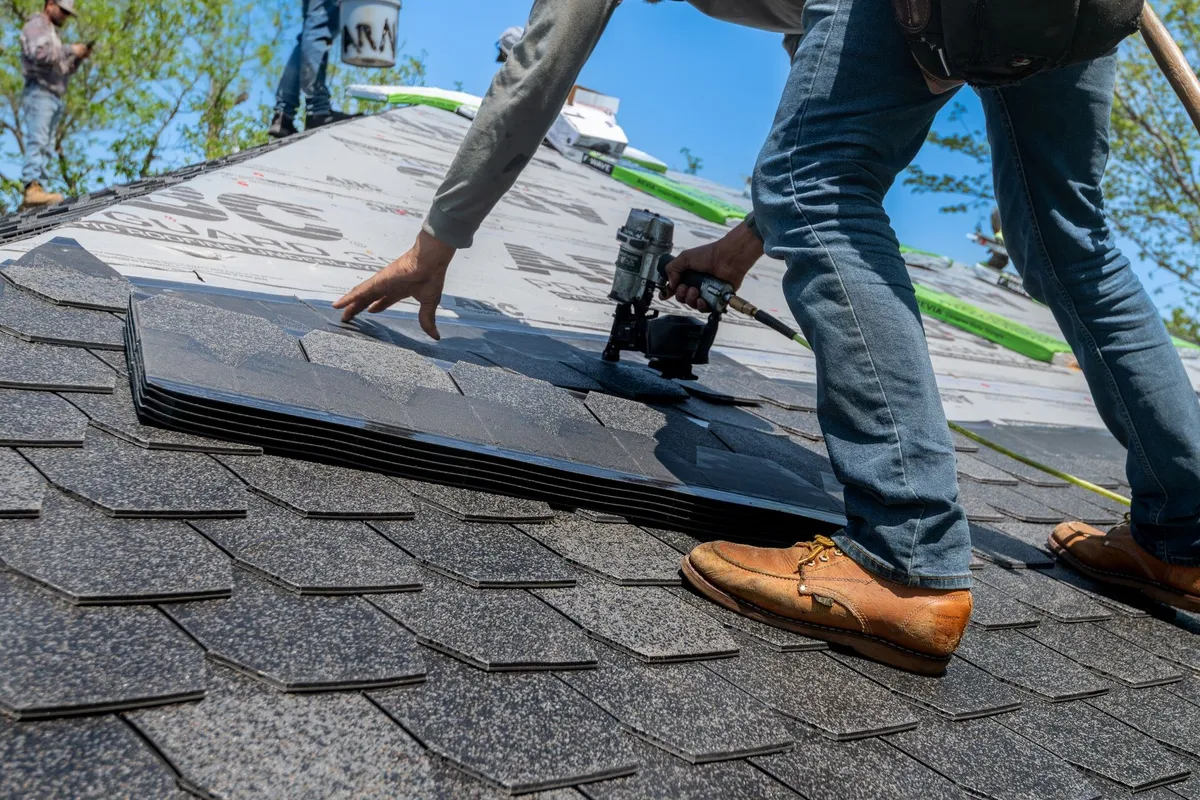
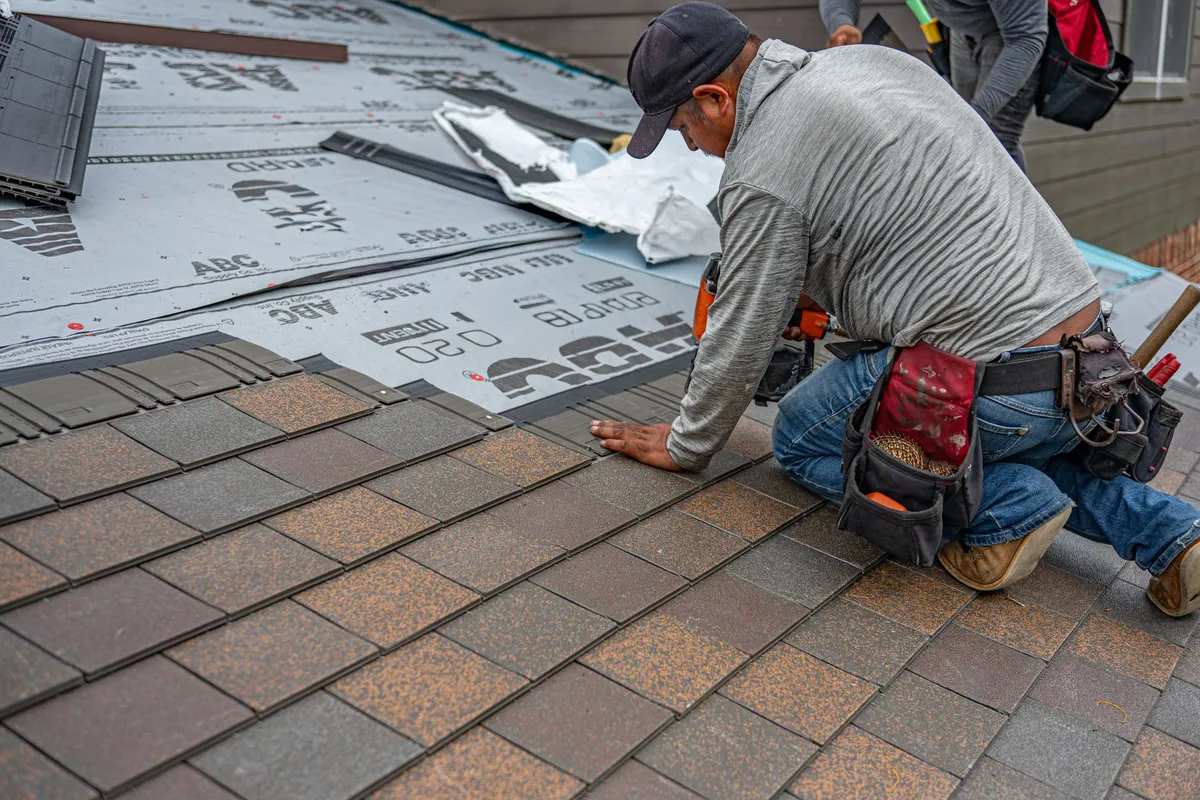
Three-tab shingles are thin, roughly 3/16 of an inch, and they lie flat. They have a single layer of mat and a relatively thin asphalt coating. They perform adequately in mild climates but are vulnerable to wind uplift and tend to crack and curl as the asphalt dries out over time. Homes built in the 1970s and 1980s that still carry the original shingles are almost certainly past their service life. When a roofer opens up one of these roofs for a repair, it is common to find dried-out underlayment, brittle felt paper, and decking that has absorbed moisture through small cracks over many years. A simple shingle replacement on the surface may not address what has happened underneath.
Tar-and-gravel flat roofs have their own aging patterns. The bitumen layers become brittle, the gravel shifts or washes away, and the seams between sections are the first places to fail. Repairing a BUR roof today requires finding a contractor who still works with that system, because the materials and techniques are less common than they were forty years ago.
The Materials That Replaced Them and What They Demand
Architectural shingles, also called dimensional or laminate shingles, became the dominant product through the 1990s and have been the standard ever since. They are noticeably thicker than three-tab, typically around 3/8 of an inch, and they are laminated from two layers of asphalt mat bonded together. This gives them better wind resistance, a longer rated lifespan (usually 25 to 50 years depending on the product), and a more substantial appearance. They are also easier to match during a partial repair, because the dimensional texture hides the transition between old and new material better than flat three-tab shingles ever did.
On flat and low-slope roofs, modified bitumen membranes replaced much of the old BUR work. These are prefabricated sheets of asphalt reinforced with polyester or fiberglass, installed in one or two layers. Torch-down application is common, but self-adhering versions are also widely used. TPO and EPDM single-ply membranes have taken over much of the commercial flat roof market. Each system has different repair requirements. You cannot patch a TPO roof with modified bitumen material and expect it to hold. Knowing what system is already on the roof is not optional, it is the first question any competent roofer should ask.
Tile roofs, which are extremely common in Henie Hills and throughout Oceanside, CA, follow a different logic entirely. Clay and concrete tile can last 50 years or more, but the underlayment beneath the tile degrades much sooner, often within 20 to 30 years. A tile repair that only addresses a cracked or slipped tile without checking the underlayment condition is frequently incomplete. Roofing Oceanside notes that this is one of the most common misunderstandings homeowners have about tile systems: the tile itself is not the waterproofing layer. For more detail on how tile repairs work, the tile roof repair page covers the specific steps involved with clay and concrete systems.
What the Shift in Materials Means for Repair Decisions Today
The practical consequence of all this evolution is that a repair estimate in 2026 requires more diagnostic work than it did thirty years ago. A roofer looking at a leak cannot assume the system they are looking at is uniform or that the materials are still in production. Older homes may have two or three layers of roofing stacked on top of each other, which affects both the repair approach and whether a permit is required. In California, most jurisdictions limit the number of roofing layers allowed before a full tear-off is required. Oceanside follows this standard, and it is worth confirming before any work begins.
Repair costs reflect this complexity. A straightforward shingle repair on a modern architectural roof, replacing a few damaged shingles and re-sealing the flashing around a vent, might run $300 to $600. A more involved repair on an older system, one that requires opening up the deck, replacing rotted sheathing, and installing new underlayment before the surface material goes back on, can reach $1,500 to $3,000 or more depending on the scope. Getting a clear scope of work in writing before agreeing to anything is not optional. If a quote does not specify what underlayment is being replaced, or whether the decking will be inspected, ask directly. A professional roof inspection before any repair work can give you an independent baseline for what actually needs to be done.
The other thing that has changed is the availability of matching materials. If a home in Henie Hills has a tile profile that was discontinued fifteen years ago, finding an exact match for a partial repair requires sourcing from salvage suppliers or accepting a visible difference. This is not a reason to avoid the repair, but it is a factor worth knowing before the work begins rather than after.
Roofing Oceanside connects homeowners in Oceanside, CA with experienced local roofers who understand the full range of systems in use here, from aging BUR flat roofs to modern laminate shingles to tile systems that need underlayment attention. If you have questions about what is on your roof and what fixing it actually involves, reach out at 918 Mission Ave, Suite 200, Oceanside, CA 92054, or call (760) 400-6456.
Frequently Asked Questions
What should I know about the materials used in my roof before making a decision?
Understanding the type of roofing material is crucial before making any decisions. Older roofs may have three-tab asphalt shingles or tar-and-gravel built-up roofing, which have known limitations. Knowing what materials are in place helps determine the best course of action for repairs or replacements.
How much can I expect to pay for repairs on an older roofing system?
Repair costs can vary significantly based on the complexity of the work needed. A simple fix on a modern architectural roof might cost between $300 to $600, while more involved work on an older system could range from $1,500 to $3,000 or more. It’s important to get a detailed estimate that specifies what will be done.
What common mistakes do homeowners make regarding tile roofs?
A frequent misunderstanding is that the tile itself provides waterproofing, when in fact, the underlayment underneath often degrades much sooner. Focusing only on visible tile issues without checking the condition of the underlayment can lead to incomplete repairs. It’s vital to address both the tiles and the underlayment for a thorough solution.
What should I do if my roof has multiple layers?
If your roof has multiple layers, this can complicate the repair process and may require a full tear-off, depending on local regulations. In California, for instance, there are limits on the number of layers allowed before this is necessary. It’s best to have a professional assess your roof to determine the right approach.
Get Directions to Roofing Oceanside
🎧 Listen to this as a podcast
Also on Apple Podcasts, Spotify, and Amazon Music.