
Oceanside, California
Roofing in Oceanside, CA: one call to a local roofer
One free call connects you with an independent local roofing contractor for leaks, repairs, re-roofs and inspections in Oceanside, CA.
Free to call. No obligation to hire anyone.
- Leaks, slipped tiles and storm damage
- Re-roofs, inspections and tile underlayment
- Homes, HOAs and commercial buildings
- Tile, shingle and flat roofs
What you can call about
Pick the roofing job that sounds like yours
Each page explains one job, what drives its cost and which Oceanside rules apply. Or skip the reading, call, and describe what you are seeing to a local roofing contractor.
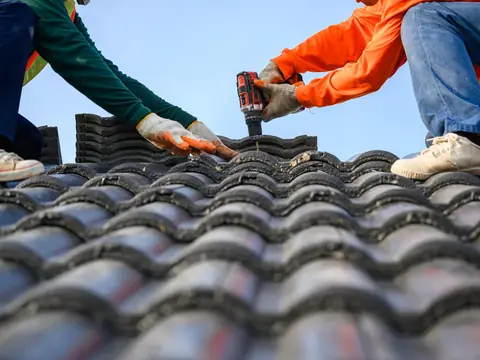
Roof repair
Leaks, lifted shingles, cracked tiles and rusted flashing.
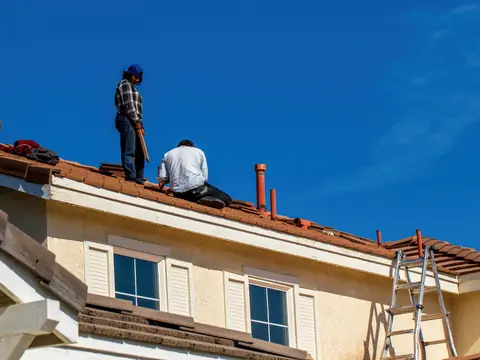
Roof replacement
Tear-off re-roofs, City permits and what a new roof costs here.
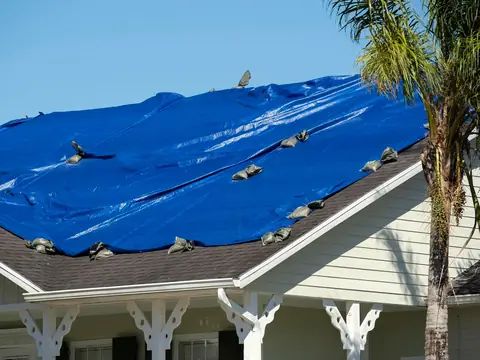
Emergency roof repair
Active leaks and storm damage that cannot wait.
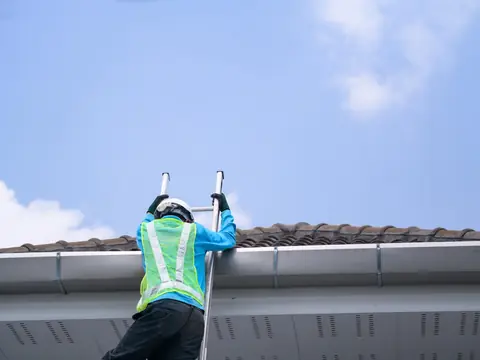
Roof inspection
A roof’s real condition before you buy, sell or renew insurance.

Tile roofing
Clay and concrete tile, lift and relay, underlayment replacement.

Commercial roofing
Flat and low-slope roofs for businesses, HOAs and multi-unit buildings.


How it works
From roof problem to roofer in one call
- Call the numberTap the call button. The call is free and connects you with an independent roofing contractor who works in Oceanside.
- Describe the roofSay what you are seeing: a ceiling stain, slipped tiles, a flat roof holding water, or a roof at the end of its life.
- Deal directly with the rooferThe contractor arranges any visit and prices the work. The quote, the contract and the decision to go ahead are between you and that contractor.
- Check the license before you signAsk for the contractor’s license number and look it up on the Contractors State License Board website. Roofing Oceanside is a referral service and does not do the work.
Local conditions
Oceanside roofs by the numbers
Four figures from public sources that help explain how roofs in Oceanside, California age.
- 300 to 3,000 feetFEMA says salt spray is heaviest near breaking waves and declines rapidly over the first 300 to 3,000 feet inland. That puts roofs in the blocks nearest the beach in the highest corrosion band for fasteners and flashing.
- 10.54 inches of rain a yearThe long-term average precipitation at the Oceanside Marina weather station, with about 81 percent arriving from November through March. A roof sits dry for months, then takes most of its rain inside five months.
- 95 mph design wind speedThe City’s design data sets a 95 mph basic wind speed for ordinary buildings. The most severe wind exposure category runs 600 feet inland from the shoreline, or 20 times the building’s height if that is greater.
- Half the homes, two decadesThe City’s Housing Element shows 24 percent of Oceanside homes were built in the 1970s and 26 percent in the 1980s. In 2026 those houses are roughly 37 to 56 years old.

Roofing costs
What roof work costs in Oceanside
Roofing Oceanside does not set prices, and only a contractor who has seen the roof can quote the job. What this page can do is show what public cost guides were publishing in 2026, with the source and date beside each figure, so you have something to set a quote against.
| Job | Published range | Source |
|---|---|---|
| Roof repair, typical | $1,211 to $1,660 | Homeyou, San Diego, July 23, 2026 |
| Leak repair | $360 to $1,550 | HomeAdvisor, national, June 19, 2026 |
| Flashing repair | $200 to $500 | HomeAdvisor, national, June 19, 2026 |
| Full roof replacement | $6,400 to $15,975, average $11,025 | HomeAdvisor, San Diego, June 17, 2026 |
| Asphalt shingles, 2,000 sq ft roof | $5,875 to $24,400 | HomeAdvisor, California, June 2026 |
| Concrete tile, 2,000 sq ft roof | $26,000 to $36,000 | HomeAdvisor, California, June 2026 |
| Clay tile, 2,000 sq ft roof | $28,000 to $38,000 | HomeAdvisor, California, June 2026 |
| Metal, 2,000 sq ft roof | $5,000 to $37,600 | HomeAdvisor, California, June 2026 |
One reason the guides disagree is roof size. Homeyou’s San Diego replacement range of $6,654 to $8,600 is based on about 1,282 square feet, well under the 2,000 square feet HomeAdvisor uses for its material ranges, and HomeAdvisor also gives its California range of $8,000 to $22,000 as $4 to $11 per square foot. Homeyou’s Oceanside tile figure of $10,883 to $16,490 uses the same 1,282 square feet, at $9 to $14 per square foot. That is why it helps to compare quotes by price per square foot as well as by total.
What moves a quote up or down
- Size and pitch. Roofers price by the square, which is 100 square feet of roof surface, and a steep roof is slower to work on.
- Material. The published ranges put concrete and clay tile well above asphalt shingles for the same roof.
- What is under the old roof. Oceanside requires a re-roof to be stripped to the deck and any rotted or damaged wood replaced, and nobody sees that wood until the tear-off.
- Metal parts. During a re-roof the City requires flashings, edging, outlets and vents to be inspected and replaced where they are rusted, damaged or deteriorated.
- The permit. The City’s fee schedule for fiscal year 2026 to 2027 lists a re-roof at $318.41 under 3,000 square feet and $405.73 over, plus a 10 percent General Plan Update surcharge and a 2 percent technology surcharge.
Each job has its own page with a fuller breakdown. See roof repair for leaks and patches and roof replacement for full re-roofs.
For a price on your own roof, call and ask the contractor you are connected with for a written quote.
Permits
How a roof permit works in Oceanside
A full re-roof in Oceanside needs a building permit from the City’s Building Division. The exemption is narrow: minor roof repairs that do not exceed 200 square feet of roof area are on the City’s permit-exempt list, and anything larger is not.
The City says plans are not required for a re-roofing permit, and it lists Residential Roof Replacement and Residential Roof Recover among the permits contractors apply for through its eTRAKiT online portal. The public counter is at 300 N Coast Highway, South Building, 1st Floor, and the Building Division’s number is 760-435-3950. The City’s building permits page has the current details.
What happens on the roof
- The permit is taken out. The City issues permits only to California licensed contractors of the appropriate classification, or to owner-builders who have owned the property for the last 12 months.
- The old roofing comes off down to the roof deck. The City requires this for re-roofs and for reinstalling an existing tile roof.
- Rotted or damaged wood is replaced, and an inspection is called before the deck is covered.
- Flashings, edging, outlets and vents are checked and replaced where rusted, damaged or deteriorated.
- The new roof goes on. For every roofing inspection the contractor or owner must have a ladder in place and tied off, because City inspectors do not bring one.
Inspections are requested through eTRAKiT, the City’s online request form or a voicemail line. A request made by 3:30 pm on a business day gets a next business day inspection. The City’s Building FAQ says a re-roofing inspection can go ahead without the homeowner present if a note granting access is left for the inspector and the permit is accessible.
Laying new roofing over old, called a re-cover, is allowed only under specific exceptions in the California Building Code, and it starts with a pre-inspection to judge whether the existing roof can take it. Replacing a lighter roof with tile over 6 pounds per square foot requires structural calculations from a licensed engineer or architect. The roof replacement page goes through tear-off, re-cover and the re-roof permit in more detail.
Three details that are easy to miss
Oceanside has 17 mobile home parks with 2,578 spaces, and a re-roof on a manufactured home is generally permitted by the state housing department (HCD), not the City. A re-roof done alongside solar needs its own permit, because the City’s instant solar permit does not cover it. The Municipal Code allows construction from 7:00 am to 7:00 pm, Monday through Saturday, and bars it on Sundays and federal holidays, with a limited exception for an owner-occupant personally doing the work.
If you are planning a re-roof, call and ask the contractor you are connected with how they handle the Oceanside permit.
Code rules
Fire zones, cool roofs and the coastal zone
Since January 1, 2026 Oceanside has enforced the 2025 edition of California’s Title 24 building codes, with City amendments. Three sets of rules shape what a re-roof here involves.
Fire hazard zones
CAL FIRE’s 2025 Fire Hazard Severity Zone maps were the first update for Oceanside since 2007, and the City Council approved the new map on June 4, 2025. The old map showed only Very High zones, while the new one has Moderate, High and Very High and generally adds parcels. The City’s re-roofing bulletin requires at least a Class A roof in high fire zones. In the mapped Wildland Urban Interface area the Municipal Code requires a Class A roof covering for new roofs and for any roof alteration, repair or replacement, and for the whole roof when more than 50 percent of it is replaced within a year.
Outside those areas the City’s own documents disagree: the Municipal Code sets Class B as the minimum, while the re-roofing bulletin says Class C. Ask the Building Division which applies at your address before materials are ordered. The State Fire Marshal publishes the maps on its fire hazard severity zone page.
The maps rate hazard over a 30 to 50 year period, not the risk to one house, and they do not count home hardening. City staff have told residents that insurers rely on their own risk models for individual structures. CAL FIRE’s guidance calls the roof the most vulnerable part of a home and recommends composite, asphalt, metal, clay or tile over wood shingles.
Cool roofs under Title 24
Oceanside is in Energy Code Climate Zone 7. The prescriptive cool-roof rules for single-family re-roofs apply when more than 50 percent of the roof is replaced, and in Zone 7 they cover low-slope roofs only, meaning a pitch under 2:12. A low-slope re-roof needs an aged solar reflectance of 0.63 and a thermal emittance of 0.75, or a Solar Reflectance Index of 75, while steep-slope re-roofs in Zone 7 are not on the list. Commercial re-roofs are treated differently, which the commercial roofing page covers.
The coastal zone
Part of Oceanside lies in California’s Coastal Zone, which the City describes as generally the area west of Coast Highway. Under the Coastal Act, repair or maintenance that does not add to or enlarge a structure needs no coastal development permit unless Coastal Commission regulations require one. That generally describes a like-for-like re-roof. If the roof’s shape or height is changing, ask the City first.
An HOA cannot override fire-retardant roofing law
California Civil Code 4720 bars an HOA from requiring a homeowner to install or repair a roof in a way that violates the state’s fire-retardant roofing law. Where a community includes homes in a very high fire severity zone, its governing documents must allow at least one fire-retardant roof covering.
Call, say where the house is and what is on the roof now, and talk it through with a local roofing contractor.
Before you hire
How to check a roofer’s license in California
Whether a business calls itself a roofer, a roofing company or a roofing contractor, in California the license it needs comes from the Contractors State License Board (CSLB). Roofing Oceanside connects you with an independent contractor (the about page explains how), and the hiring decision stays with you. Run these checks on any roofer, including the one you reach through this site. The City’s Building Division keeps no list of contractors to hire and points residents to the CSLB as well.
- Ask for the license number. Roofing is covered by the C-39 Roofing classification, for contractors who install and repair roofs using materials such as shingles, roof tile, slate, metal roofing systems and membranes.
- Look it up on the CSLB’s Check a License page by license number, business name or personnel name, or call 1-800-321-CSLB (2752). The record includes license status and complaint disclosure.
- Confirm workers’ compensation. Every active C-39 roofing contractor must carry workers’ compensation insurance or a valid Certification of Self-Insurance, whether or not they have employees.
- Get it in writing. California requires a written contract for home improvement projects over $500, and it must state who will get the permits and give a completion date.
- Check the down payment. It cannot exceed $1,000 or 10 percent of the contract price, whichever is less.
When a license is required
Since January 1, 2025 a California contractor license is required for any job of $1,000 or more in combined labor and materials. Under $1,000 a license is still required if the job needs a building permit or the person hires workers. In Oceanside that takes in every re-roof and every roof repair over 200 square feet, because those need a permit.
Payments and bids
Apart from the limited down payment, it is against the law for a contractor to collect payment for work not yet completed or materials not yet delivered. Progress payments must be listed in dollars and cents and tied to the work they cover. The CSLB advises getting at least three bids, checking references and not paying cash.
A bid worth comparing names the material, the tear-off, an allowance for replacing damaged deck wood, the flashing and vent work, the permit and the cleanup. Thinking of acting as owner-builder instead? The City warns that an owner who hires anyone other than a state-licensed contractor becomes an employer and is liable if a worker is injured on the job.
Why this site is not a contractor
Under California Business and Professions Code 7027.1 it is a misdemeanor to advertise for construction work without a valid license in that classification. Roofing Oceanside is not a licensed contractor and does no roofing work, so it says so plainly: it is a referral service, and the roofer you are connected with is an independent business.
Call to be connected with a local roofing contractor, then check the license number before anything is signed.
Climate
What the coast does to a roof
Oceanside has 3.7 miles of shoreline, and the ocean shapes how its roofs wear. Near the water, the metal parts are usually the first to show it.
Salt and metal
FEMA’s coastal construction guidance says salt spray is heaviest near breaking waves and drops off rapidly in the first 300 to 3,000 feet inland. That puts the beachfront and the blocks nearest the ocean in the highest corrosion band for roof fasteners, flashing and other metal. The same bulletin cites studies that found accelerated corrosion 5 to 10 miles inland, which reaches well into inland Oceanside.
For fasteners and connectors on coastal buildings FEMA points to stainless steel, or to thick hot-dip galvanizing rated G185 or higher. Oceanside has a local example of what salt does: after the April 2024 Oceanside Pier fire was ruled accidental and electrical in origin, a fire official said corrosion from the saltwater environment could have caused the electrical failure.
The marine layer
NOAA describes the marine layer as cool, moist ocean air held under a temperature inversion, the source of what Southern Californians call May Gray and June Gloom. Its climate summary for the San Diego County coast describes regular night and early morning low cloud in spring and summer that usually clears during the morning. That matters on a roof because, as FEMA notes, metal corrodes faster the longer its surface stays damp.
The Asphalt Roofing Manufacturers Association says coastal and humid climates are the most favorable for roof algae. Its guidance is measured: there is no scientific evidence that algae damages asphalt shingles, although it changes how they look. Moss is different, because it can lift or curl shingle edges. Asphalt shingles should never be pressure washed.
Rain, wind and sun
The Oceanside Marina weather station averaged 10.54 inches of precipitation a year over a record running from 1909 to 2016. About 81 percent of it came from November through March, and each of June, July and August averaged less than a tenth of an inch. A roof can sit dry for months and then take most of its yearly rain inside five months, which is when problems that developed over the dry stretch tend to show.
Inland, there is more sun to contend with. NOAA notes that sunshine increases markedly toward the interior, and that hot, dry easterly winds bring the highest temperatures of the year in September and October, with relative humidity often dropping below 20 percent. The National Weather Service defines a Santa Ana wind as strong, hot, dust-bearing wind that descends to the Pacific Coast from inland desert regions.
If water is coming in right now, the emergency roof repair page covers the first steps. A roof you are simply unsure about is a job for a roof inspection.
Rusted flashing, a stained ceiling or a roof nobody has looked at in years: call to talk to a local roofing contractor.
Neighborhoods
Roof types across Oceanside neighborhoods
You can call about a roof at any Oceanside address. The City’s Housing Element counts 66,475 housing units: 53 percent single-family detached, 12 percent attached, about 30 percent multi-family and 5 percent mobile homes. What is on the roof depends heavily on when the tract went up.
- Downtown and Townsite. The 1920s boom left Spanish Eclectic, Mission Revival and Craftsman homes plus beach cottages, so red clay tile, flat roofs behind tile-clad parapets and low-pitched gables share the same blocks.
- South Oceanside (South O). In 1952 Walter H. Potter began building 73 Minimal Traditional houses between Stewart and Hunsaker Streets, and the Potter Homes later spread through South Oceanside: one-story houses with low to medium pitched hip or side-gable roofs.
- Fire Mountain. Former avocado and citrus groves annexed in the 1960s. The Ranch-style homes pictured there in the historic context statement prepared for the City were built with low-pitched roofs and wood shakes, and CAL FIRE now recommends other materials over wood shingles.
- Oceana and Peacock Hills. Two 55-plus communities. Oceana was built from 1964 to 1984 with more than 2,000 homes, from single-family houses to three-story condominium buildings, so check who is responsible for the roof. Peacock Hills has 920 single-story homes arranged as duplexes, so neighbors may need to coordinate a re-roof.
- Rancho Del Oro and Ivey Ranch. Rancho Del Oro is a 1,950-acre master-planned community, mostly built between 1988 and the early 2000s with stucco walls and tile roofs, where roof color and material often need village HOA approval. Ivey Ranch, beside it, was built from the late 1980s to the early 2000s, and many of its pockets have HOAs.
- Ocean Hills. A gated 55-plus community of 1,632 homes in eight villages, mostly late 1980s, with white stucco and red tile. Local real estate guides say the village associations handle roof repairs, so read your village’s documents first.
- Jeffries Ranch and Arrowood. Jeffries Ranch has 273 single-family homes on quarter to half acre lots, built mainly from the late 1970s to the early 1990s. Arrowood dates from 2000 onward, so its roofs are among the newer ones in the city.
- Oceanside Harbor and North Coast Village. Condominiums at the water’s edge, where salt spray is heaviest and the roof is normally an association matter.
On a tile roof the tile sheds most of the water, but the underlayment beneath it is the waterproof layer, and it generally wears out before the tile does. That is why a tile roof from the late 1980s can leak while every tile still looks sound. The tile roofing page explains a common fix, which is lifting the tile, replacing the underlayment and relaying it.
In San Luis Rey, the historic context statement prepared for the City uses the Mission as its picture of the Mission Revival style, whose defining features include red clay tile roofs and shaped parapets. The service area page covers more of the city.
Wherever the house is in Oceanside, the call is the same: tap the button and describe the roof.
Questions
Oceanside roofing questions, answered plainly
Is Roofing Oceanside a roofing contractor?
No. Roofing Oceanside is a referral service, not a roofing contractor. It does not repair, install or inspect roofs, and it is not a licensed contractor. When you call the number on this site you are connected with an independent roofing contractor who works in the Oceanside area. Any inspection, quote, contract, warranty and payment is between you and that contractor, so check their license with the Contractors State License Board before you sign.
What happens when I call, and does it cost anything?
The call is free and there is no obligation to hire anyone. You are connected with an independent local roofing contractor. Tell them the address, the type of roof if you know it, and what you are seeing, such as a ceiling stain, slipped tiles or a flat roof holding water. The contractor decides how to follow up and prices any work. Roofing Oceanside does not quote, schedule or carry out the job.
How much does a new roof cost in Oceanside?
Only a contractor who has seen the roof can price it. As a guide, HomeAdvisor (updated June 17, 2026) puts a new roof in San Diego at $6,400 to $15,975, averaging $11,025, and California replacements at $4 to $11 per square foot. For a 2,000 square foot roof its California ranges are $5,875 to $24,400 in asphalt shingles and $26,000 to $36,000 in concrete tile. These are published figures, not quotes from Roofing Oceanside or any contractor, and the roof replacement page sets out more of them.
How much does a roof repair cost in Oceanside?
It depends on what has failed, and only a contractor who has looked at the roof can price it. Among published guides, Homeyou (updated July 23, 2026) gives a typical San Diego roof repair range of $1,211 to $1,660. HomeAdvisor’s national guide (updated June 19, 2026) gives a typical range of $395 to $1,967, with leak repairs at $360 to $1,550 and flashing repairs at $200 to $500. These are published figures, not quotes from Roofing Oceanside or any contractor, and the roof repair page has more detail.
Do I need a permit to replace my roof in Oceanside?
Yes. A full re-roof needs a building permit from the City of Oceanside Building Division. Plans are not required for a re-roofing permit, although switching to heavier tile calls for structural calculations. The City issues permits only to licensed contractors of the appropriate classification or to owner-builders. Its fee schedule for fiscal year 2026 to 2027 lists a re-roof at $318.41 or $405.73 depending on roof size, before surcharges.
Does a small roof repair need a permit?
Not if it is small enough. Oceanside exempts minor roof repairs that do not exceed 200 square feet of roof area from a building permit, and larger repairs need one. A skylight that does not require cutting structural members other than the roof sheathing is also on the exempt list, although any electrical work that goes with it is not. Anyone you pay to do work that needs a permit must hold a contractor license, even on a job under $1,000.
How do I check that a roofer is licensed in California?
Ask for the contractor’s license number, then look it up on the Contractors State License Board website by number, business name or personnel name, or call 1-800-321-CSLB (2752). The record shows the license status and any complaint disclosure. Roofing is covered by the C-39 Roofing classification, and every active C-39 contractor must carry workers’ compensation insurance or a valid Certification of Self-Insurance, whether or not they have employees. The City of Oceanside keeps no list of contractors to hire and points residents to the same board.
How much deposit can a roofer ask for in California?
On a home improvement contract the down payment cannot be more than $1,000 or 10 percent of the contract price, whichever is less. Beyond that, the Contractors State License Board says it is against the law for a contractor to collect payment for work not yet completed or materials not yet delivered. Progress payments have to be listed in dollars and cents and tied to the work they cover. The Board also advises against paying cash.
Does Title 24 require a cool roof when I re-roof in Oceanside?
Only on low-slope roofs. Oceanside is in Climate Zone 7, where the prescriptive cool-roof rules for single-family re-roofs apply to roofs with a pitch under 2:12, and only when more than 50 percent of the roof is replaced. Steep-slope re-roofs in Zone 7 are not on the list. Where the rule does apply, only the ratings listed in the Cool Roof Rating Council directory can be used to show a product complies. Commercial re-roofs follow separate cool-roof rules.
Is my Oceanside home in a fire hazard severity zone, and does that change the roof?
It can. CAL FIRE’s 2025 maps, approved by the City Council on June 4, 2025, show Moderate, High and Very High zones, where the old map showed only Very High. The City’s re-roofing bulletin requires at least a Class A roof in high fire zones. CAL FIRE also advises closing the gaps under roof tiles and shingles, because wind-blown embers can ignite homes up to a mile away. Confirm your parcel’s zone and required roof class with the City before choosing a material.
Do homes near the beach need coastal approval for a re-roof?
Generally not for a like-for-like job. The City describes its Coastal Zone as generally the area west of Coast Highway. The Coastal Act says repair or maintenance that does not add to or enlarge a structure needs no coastal development permit unless Coastal Commission regulations require one, which generally describes a straightforward re-roof. The ordinary City building permit still applies. If the roof’s shape or height is changing, ask the City before work starts.
Do I need HOA approval for a new roof, and what about solar panels?
In a planned community, check before you sign anything. In Rancho Del Oro, roof color and material often need village HOA approval, and in Ocean Hills local guides say the village associations handle roof repairs themselves. State law limits what an HOA can demand: Civil Code 4720 bars roof rules that conflict with fire-retardant roofing law, and Civil Code 714 voids rules that effectively prohibit a solar energy system. A re-roof done alongside solar needs its own City permit.
Ready to talk to a roofer in Oceanside?
One free call, no forms to fill in. You are connected with an independent local roofing contractor, and whether you hire them is your decision.